




You pick up your phone to make a call. Thirty minutes later, your head is pounding on the same side you were holding it.
You take a painkiller, move on, and don't think much of it. But it happens again. And again.
Most people blame stress, screens, or not drinking enough water, and maybe those are factors.
But headaches are one of the most commonly reported symptoms associated with mobile phone use.
They show up consistently across studies, across countries, and across age groups.
People describe them as dull, pressing, often located on the side of the head closest to where they hold their phone, and usually starting during or shortly after a call.
For a long time this was dismissed. Now it's being taken more seriously.
What the research says
A systematic review and meta-analysis - the highest level of scientific evidence - analyzed 30 studies on mobile phone use and headaches. Researchers found that mobile phone users may have a 30% higher likelihood of experiencing headaches compared to non-users.
When exposure duration exceeded 100 minutes per week, that figure rose to 41%.
The longer the exposure, the stronger the association.
A separate study of 532 adults found that when phone call duration reached five minutes or longer, people were over four times more likely to experience severe headaches compared to those with shorter calls.
When a pattern this consistent appears across many independent studies, spanning different countries, different populations, and different research teams - that's not something to brush past.
Scientists are by nature cautious in their language. The fact that this association keeps showing up, study after study, says something worth paying attention to.
The dose question nobody is asking
Think about how you used your phone in 2010. Maybe a few calls a day. Texts here and there. Now think about today.
You wake up and check it before you get out of bed.
You scroll through breakfast. You take calls back to back. You stream, you message, you scroll again at night.
The average person now spends over four hours a day on their phone, and for many people it's significantly more.
The question isn't really whether phone use can be connected to headaches.
The question is how much exposure your body is accumulating every single day.
Because the dose makes the difference.
Safety standards for mobile phone radiation were set in 1996. Thirty years ago.
Before smartphones. Before social media. Before your phone became the first and last thing you touch every day.
The world changed completely - the standards didn't.
What a Headache Actually Costs You
Think about the last time you had a bad headache. Not just the pain - think about everything else it took from you.
The meeting where you couldn't think straight.
The conversation where you were short with someone you care about.
The workout you skipped because your head was pounding.
The evening you planned to spend on something meaningful that turned into lying on the couch waiting for a painkiller to kick in.
Headaches make you irritable. They make you less patient, less present, less yourself.
They quietly chip away at the things you're working toward - your focus, your energy, your relationships, your goals.
Most people just push through them. They normalize something that is actually costing them more than they realize.
If headaches are a regular part of your life and you've never found a clear reason for them, it's worth asking what in your daily environment might be contributing - especially something you're in contact with for hours every single day.
What you can actually do
There are simple habits worth trying.
Using speaker mode during calls keeps the phone away from your head.
Keeping calls shorter when possible reduces exposure duration.
Keeping your phone off your nightstand at night removes it from close proximity during the hours your body is recovering.
But even with these adjustments, most people aren't going to stop using their phones - and the reality is that reducing habits alone doesn't fully address the level of exposure that comes with modern device use.
And they shouldn't have to give up their devices.
There are many reasons people experience headaches, and no single cause can be assumed.
But one thing is established: radiofrequency radiation from mobile devices has been classified by the World Health Organization as possibly carcinogenic to humans.
If radiation is one of the factors contributing to how your body feels, reducing how much your body absorbs is a step worth taking.
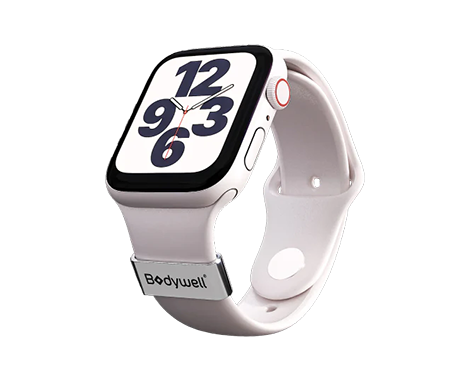
This is where Bodywell® comes in - Swiss-made, independently tested, and built on over a decade of scientific research.
Bodywell® works with your body to mitigate the biological effects of electromagnetic radiation, without affecting how your devices perform.
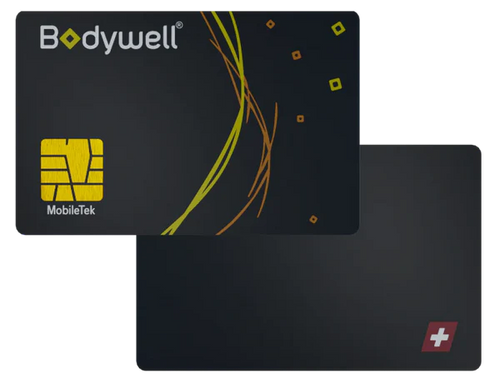
- BioCard Pro - designed for broader protection from the radiation that surrounds you, such as WiFi, 5G towers, other people's devices, and more. It works with your body to mitigate the biological effects of EMF radiation from the environment around you.
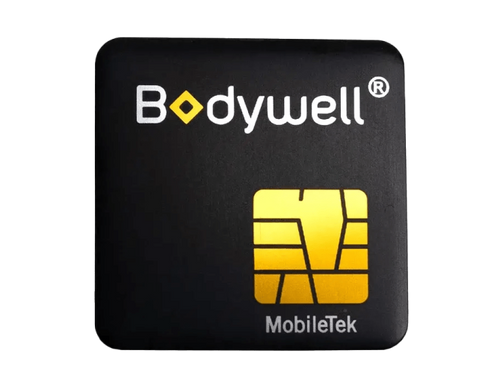
- BioChip - designed to reduce your radiation absorption from the devices you are in direct contact with, such as your phone and laptop. Independently tested and confirmed to reduce radiation absorption by up to 80%.
[article-product id="7608535908517"]
[article-product id="8239838560421"]
One Variable You Actually Have Control Over
Headaches have many possible causes. Nobody can tell you exactly what's behind yours.
But if your phone is within arm's reach for most of your waking hours, and you're experiencing headaches regularly - it's a reasonable question to ask.
Radiofrequency radiation from devices has been classified as possibly carcinogenic to humans.
With Bodywell®, you can reduce how much of it your body absorbs - without giving up the technology that runs your life.
Visit bodywell.com to explore independently tested solutions that work with your body, not against it.


Leave a comment
This site is protected by hCaptcha and the hCaptcha Privacy Policy and Terms of Service apply.