





Something significant just happened in Washington last week that almost no one noticed.
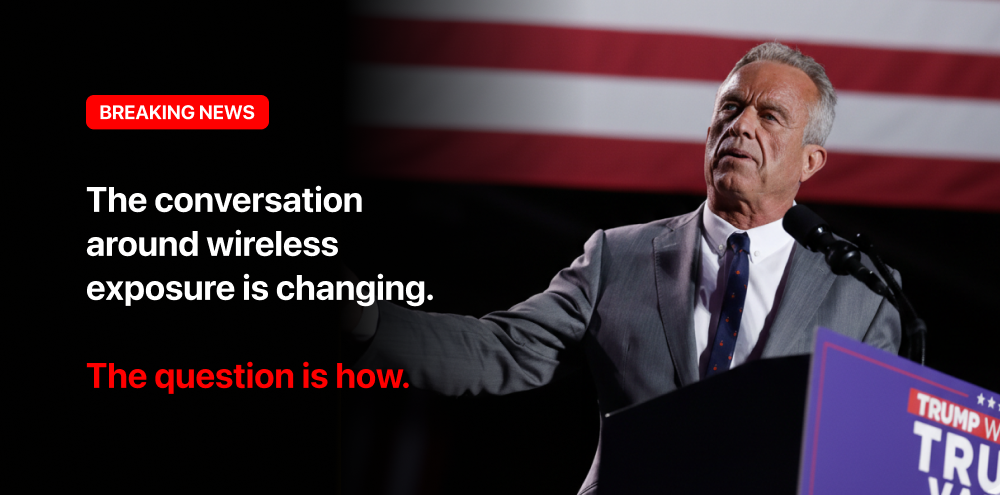
The FDA quietly removed webpages stating that cellphones aren't dangerous. The same day, the Department of Health and Human Services announced it's launching a new study on cellphone radiation health effects.
This isn't a minor policy tweak. This is the U.S. government acknowledging that decades-old conclusions about wireless safety may need to be reconsidered.
What Actually Happened
On January 15, 2026, HHS made two simultaneous moves:
The FDA removed old webpages that had stated "the weight of scientific evidence has not linked exposure to radio frequency energy from cellphone use with any health problems," according to NBC News.
HHS announced a new study on electromagnetic radiation and health, specifically investigating cellphone radiation effects.
"The FDA removed webpages with old conclusions about cellphone radiation while HHS undertakes a study on electromagnetic radiation and health research to identify gaps in knowledge, including on new technologies, to ensure safety and efficacy," HHS spokesman Andrew Nixon told Fox News Digital.
The study was directed by President Trump's MAHA (Make America Healthy Again) Commission as part of its strategy report.
HHS Secretary Robert F. Kennedy Jr. Statement
HHS Secretary Robert F. Kennedy Jr. told USA Today on January 16 that "electromagnetic radiation is a major health concern," adding that he is "very concerned about it."
Kennedy pointed to what he called "literally over 10,000 studies" documenting health effects from electromagnetic radiation, including cancer and tumor growth.
This isn't Kennedy's first time raising these concerns. As an environmental lawyer, he successfully petitioned a federal court in 2020 to force the Federal Communications Commission to review its wireless radiation rules. He's also represented plaintiffs who sued telecom companies claiming their brain tumors were caused by cellphones.
"Our children are swimming around in a toxic soup," Kennedy told podcaster Joe Rogan in 2023, suggesting that cellphones and WiFi radiation could be among the causes of chronic illnesses in children.
The Science That's Been Ignored
While some agencies still maintain there's no proven link between cellphones and health problems, the research landscape is more complicated than those statements suggest.
-
The National Toxicology Program Study: In 2018, the National Institutes of Health conducted a study concluding there is "clear evidence" that high exposure to radiofrequency radiation was associated with cancer in male rats
"In our studies, rats and mice received RFR across their whole bodies. By contrast, people are mostly exposed in specific local tissues close to where they hold the phone," said senior scientist John Bucher at the time. - Thousands of Studies Showing Effects: According to The Defender, a compilation by Dr. Henry Lai, professor emeritus of bioengineering at the University of Washington, shows over 2,500 peer-reviewed studies published since 1990 found significant adverse effects from EMF exposure.
- The EMF-Portal, run by RWTH Aachen University in Germany, lists roughly 48,850 publications related to EMFs and summarizes around 7,000 of those studies.
- The 1971 Military Report: In 1971, the U.S. Naval Medical Research Institute reviewed 2,311 scientific studies that linked EMFs to 132 different biological effects, symptoms, and diseases. Researchers later showed that 23 of the top 36 fastest-growing chronic illnesses were conditions identified in that report as being linked to EMFs.
What This Means for Your Health
The average American holds their phone close to their head for calls, keeps it in their pocket throughout the day, and sleeps with it charging on their nightstand. More than 95% of American adults use a cellphone, according to EarthTimes.
Current FCC regulations require that cellphones sold in the U.S. not exceed 1.6 W/kg (watts per kilogram) SAR (Specific Absorption Rate), averaging over 1 gram of tissue. But those standards were set in 1996 - before smartphones, before constant connectivity, before 5G networks.
The exposure reality in 2026:
- Multiple devices per person (phone, smartwatch, wireless earbuds, laptop)
- 5G and now 6G network expansion
- Cell towers near homes, schools, and workplaces
- Children using wireless devices from increasingly younger ages
- 24/7 connectivity that didn't exist when safety standards were established
[article-product id="7608535908517"]
Children and Schools: The Urgent Concern
Last year, 22 states restricted or banned cellphone use in schools to protect children's mental and physical health as part of the MAHA movement.
Kennedy has pushed for these restrictions, citing possible neurological damage and other health concerns as part of a broader message about reducing environmental risks for youth.
Children face unique vulnerabilities:
- Thinner skulls provide less shielding
- Developing brains are more susceptible to potential disruption
- Decades more lifetime cumulative exposure ahead
- Higher absorption rates relative to body size
What Happens Next?
HHS has not provided details on who will lead the new cellphone radiation study or when results might be expected.
Some advocates argue that more research isn't the answer. "The existing scientific evidence and court rulings already require immediate policy action," wrote Theodora Scarato in a statement reported by The Defender. "Safety guidelines must be updated to reflect today's continuous, real-world exposures."
Others see the study as a necessary step. "We know wireless exposure leads to harm, but there are still knowledge gaps," said W. Scott McCollough, lead litigator for Children's Health Defense's EMR & Wireless cases, according to The Defender.
Unanswered questions:
- Will the federal government sponsor new long-term studies?
- Could regulatory safety limits change after nearly 30 years?
- Will cellphones require warning labels for vulnerable populations?
- How will 5G and 6G expansion factor into safety assessments?
What You Can Do Now
While federal agencies reassess their positions, you don't have to wait for new regulations to reduce your exposure. What we've been advocating for years has now become the center of national conversation in 2026. The good news? Solutions already exist that let you stay connected while reducing measurable exposure.
Most of us depend on phones for work, use smartwatches for health monitoring, or need constant connectivity. Protection technology offers another approach.
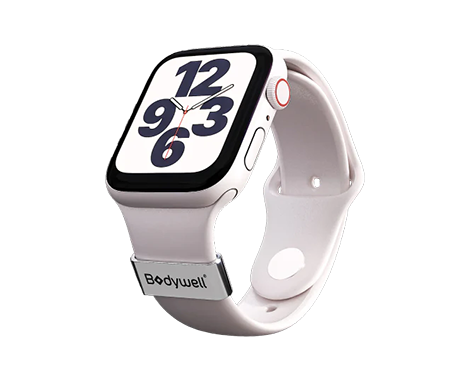
Bodywell®'s Swiss-engineered products reduce biological effects of electromagnetic radiation while maintaining full device performance:
80% SAR Reduction - Independent laboratory testing shows significantly less radiation absorption
20% Thermal Reduction - Reduces heat effects from devices
100% pH Recovery - Helps restore cellular balance
Zero Performance Impact - Full signal, functionality, and battery life maintained

The Bigger Picture
You use your phone every day. Your children use devices for school and entertainment. Your home is filled with WiFi-connected technology. These aren't going away.
But knowing that federal health agencies are reconsidering decades-old safety conclusions should prompt you to reconsider your own wireless habits - and take steps to protect yourself while the government figures out what the science actually shows.
The question isn't whether to use technology. It's how to use it more safely while regulators catch up to the reality of 2026.






Leave a comment
This site is protected by hCaptcha and the hCaptcha Privacy Policy and Terms of Service apply.