




December arrives. The temperature drops. The days get shorter. And suddenly, your entire life moves indoors.
Your laptop, which sat in a coffee shop during warmer months, now becomes a permanent fixture on your home office desk, or more likely, on your lap while you work from the couch. Your kids' school breaks mean weeks of streaming, gaming, and tablet time instead of outdoor play. Your evening Netflix habit extends because, well, it's too cold to go out anyway.
You're spending more time at home. Working more from home. Using more devices, more often, in closer proximity to your body.
But here's what nobody tells you: the season isn't the only thing changing. Your electromagnetic radiation exposure is about to increase dramatically.
Winter Changes Your EMF Exposure Pattern: Here's How
The radiation itself doesn't get stronger in winter. Your WiFi router, laptop, and phone emit the same electromagnetic fields year-round. But something crucial changes: how much time you spend exposed to it.
Winter reverses this completely. People spend significantly more time indoors surrounded by more radiation sources. It's not just your WiFi router, work laptop, and phone anymore. Now add electric blankets running all night, space heaters, and other heating devices. Your body is absorbing radiation from multiple sources simultaneously. Multiple radiation sources at once means your total exposure becomes significantly worse.
The difference isn't the radiation, it's the time. In summer, you're outdoors. Your exposure is scattered across different places and activities. In winter, you're indoors consistently, surrounded by the same radiation sources from morning until night.
This concentrated, prolonged exposure is the real shift. Over weeks and months, your body experiences continuous contact with electromagnetic radiation in a way summer never demands. That's what changes.
The Work-From-Home Laptop Problem That Winter Amplifies
Remote work expanded dramatically in recent years. And winter is when work-from-home professionals experience their longest consecutive indoor stretches.
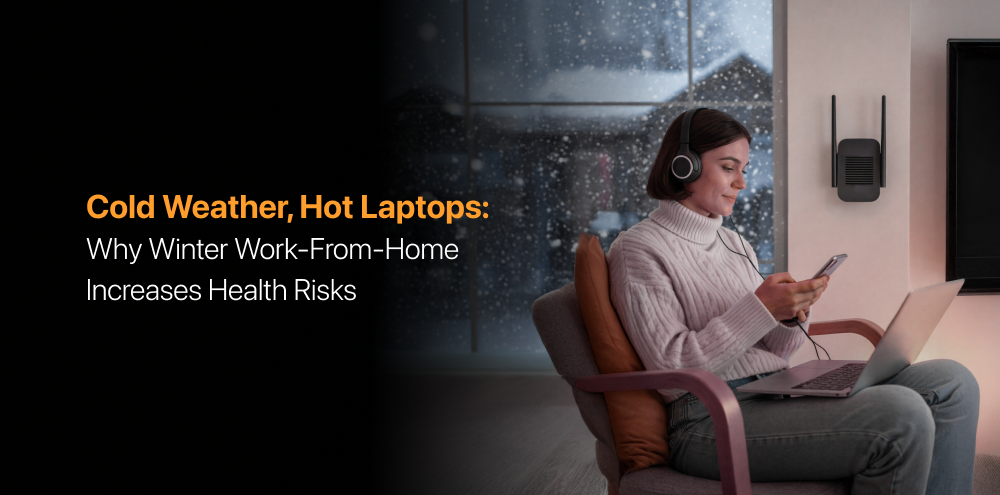
Most people working from home have never thought about optimal device positioning. A desk with proper distance from your body seems excessive. Instead, people work from couches with laptops on their laps, comfortable, yes, but problematic from an EMF exposure perspective.
When your laptop sits on your lap for 6-8 hours daily, you're positioning a wireless device (WiFi-connected, possibly Bluetooth-enabled) in direct or very close contact with your torso and reproductive organs. That device is constantly transmitting and receiving data, generating radiofrequency radiation aimed directly at these sensitive tissues.
During winter, when work-from-home hours typically extend (fewer outdoor commutes, more indoor time), this problem compounds. You might be working from your couch with a laptop on your lap not for 4 hours, but for 8+ hours, not just occasionally, but daily for months.
[article-product id="7608535908517"]
Why Children Face Peak Exposure During Winter Break
School ends. Winter break begins. And suddenly, your child's screen time explodes. A child who might get 2-3 hours of daily screen time during school days now gets 6-10 hours or more during winter break.
What makes this particularly concerning: Children's developing brains absorb electromagnetic radiation differently than adult brains.
Research has documented that developing nervous systems are more vulnerable to EMF effects than mature adult systems. The brain regions actively formed during childhood: those responsible for learning, memory, and emotional regulation, are the most sensitive to potential disruption.
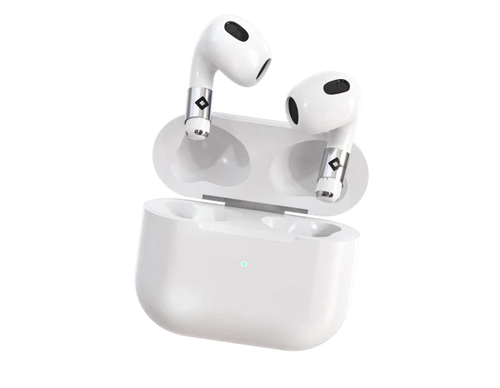
During winter break, when children are indoors for weeks using devices extensively, they're experiencing cumulative radiation exposure during critical developmental periods. And these aren't just passive exposure hours: tablets held in hands, phones in pockets, wireless earbuds in ears, gaming controllers held close. The proximity and duration matter, especially when device use extends for hours daily throughout an entire school break.
The WHO's Position: Why Winter Exposure Matters Now
In 2011, the International Agency for Research on Cancer (IARC) of the World Health Organization classified wireless radiation as a "possible human carcinogen." This classification places radiofrequency radiation in a category that warrants caution and further research.
But here's what's changed: last week, the US government took an unprecedented step. The FDA removed webpages stating that cellphones are safe and launched an official investigation into radiation health risks. For years, the FDA's position was definitive: "The weight of scientific evidence has not linked cellphone radiation with any health problems." Now, those pages are gone.
HHS is investigating electromagnetic radiation's effects on human health, specifically looking to "identify gaps in knowledge", including impacts from emerging technologies like 5G. HHS Secretary Robert F. Kennedy Jr. stated publicly to USA TODAY: "Electromagnetic radiation is a major health concern. I am very concerned about it."
Yet here's the critical problem: US safety limits for phones require devices stay below 1.6 W/kg radiation absorption. Those standards? They were set decades ago and haven't been updated despite:
- 5G networks rolling out nationwide
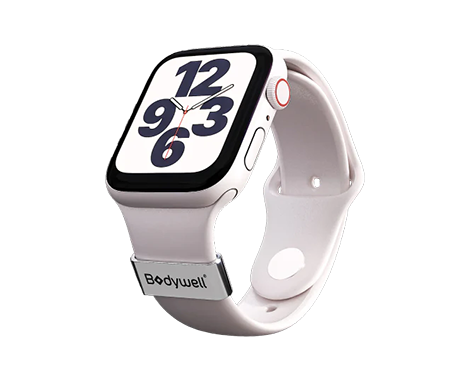
- Smartwatches worn 24/7
- WiFi saturation in every building
- Children using wireless devices from infancy
Winter makes this worse. When you're indoors for months without outdoor breaks, your EMF exposure becomes relentless and concentrated.
How to Reduce Your Winter EMF Exposure
You can't eliminate winter. You can't realistically abandon technology. But you can take specific steps to reduce your EMF exposure during the season when it peaks.
Bodywell® mitigates the biological effects of electromagnetic radiation by introducing a consistent, recognizable pattern to your body, reducing the stress and imbalance caused by chaotic EMR waves, without disrupting your device's performance.
Your laptop still connects at full speed. Your WIFI still streams without buffering. Your phone still gets all your messages instantly. Everything works exactly the same.
Bodywell®'s technology has been tested and validated in SAR testing, which measures reduced radiation absorption in the body, and TRP/TIS testing, which ensures no interference with device performance. Additional peer-reviewed studies conducted in collaboration with top scientists and institutions support these results.
For devices in direct contact with your body (laptop on your lap, phone, or tablet):
For your broader environment (WiFi router, smart thermostat, all ambient radiation):
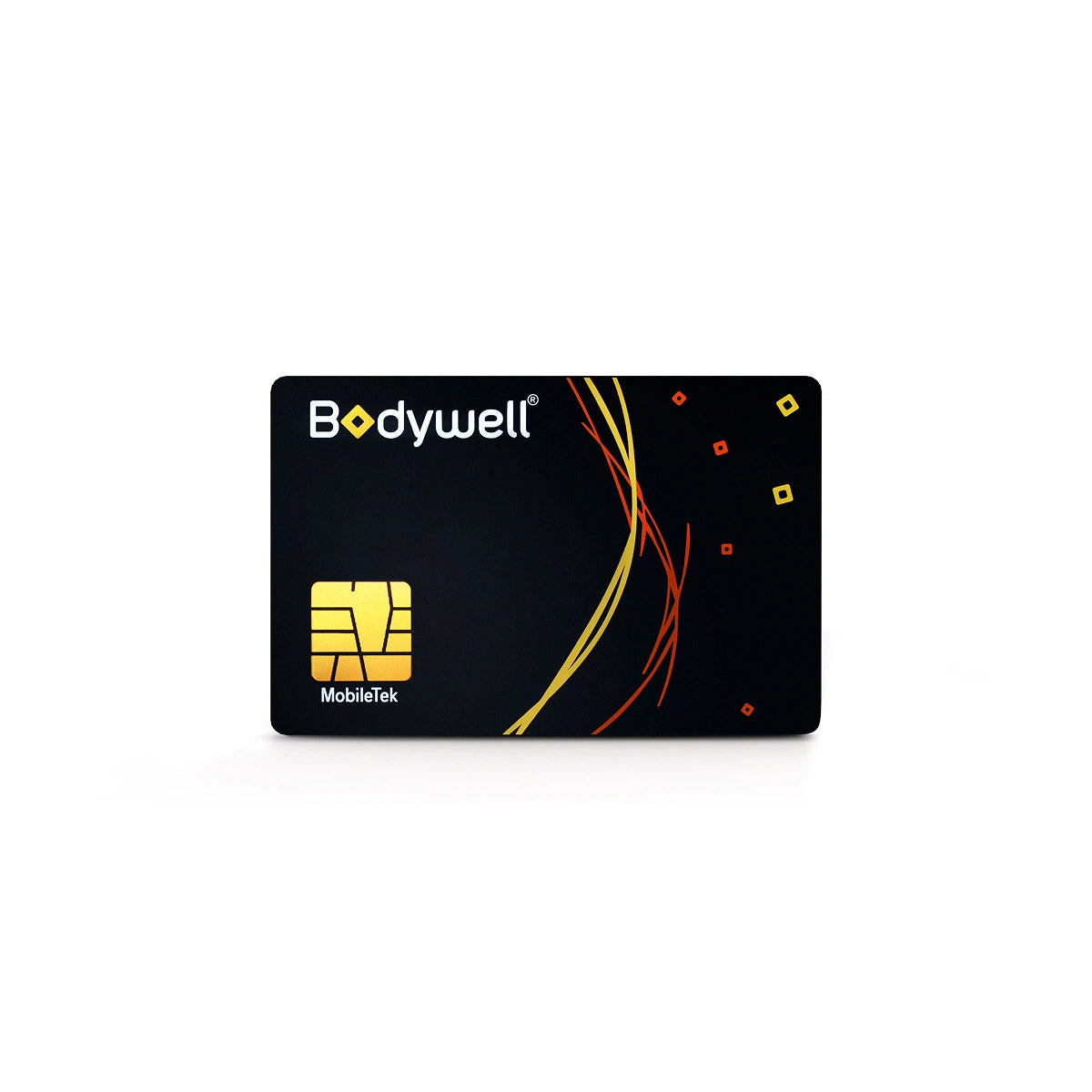
- The BioCard Pro works across multiple sources simultaneously. Keep it in your pocket, on your desk, or near your bed throughout your extended winter indoor time. The BioCard is for broader environment (WIFI router, smart thermostat, all ambient radiation):

The result: you get your health back. Your digital habits and work-from-home routine stays the same. Your family's entertainment during winter break continues. This winter, when you settle in for long work sessions or extended family time indoors, you can do so knowing you're taking real steps to protect yourself and your loved ones.





Leave a comment
This site is protected by hCaptcha and the hCaptcha Privacy Policy and Terms of Service apply.